This semester I learned that we humans have been damaging the planet for such a long time that nowadays it is practically impossible to avoid some kind of exposure anywhere we go and wherever we are. Now it's more about limiting our exposure instead of avoiding it. Lower-income minority communities always get stuck with the worst of everything which is why they are the most vulnerable when it comes to overall health outcomes. They are disproportionately more at risk of getting respiratory, infectious, and cardiovascular diseases as well as being exposed to toxic chemicals in the food and products they purchase. More and more companies have started to create safer alternatives to the everyday products we use however they are often more expensive and therefore not tailored for this subset of the population. We as consumers have a lot more power than we think; as long as we continue to buy the harmful products that companies are stocking at our local stores nothing is going to change. Lastly, we as public health professionals have the responsibility of educating people on the importance of protecting our environment and the harmful chemicals found all around us, as well as advocating for policy change and stricter regulations on chemicals that are produced and used to make the everyday items we rely on.
As far as group blogging goes, I actually really enjoyed researching different topics of environmental health and posting my findings and thoughts. I do think that some weeks we had a few blogs that cloud have been condensed into fewer. Also when it came to commenting on every groupmates' posts, some weeks it was hard to comment on each individual blog because there were very similar observations which made it hard not to sound redundant across all posts. Perhaps alternating the groupmate who's blog we commented on every week would help. Other than this, I really enjoyed the class. Environmental health was never a top interest of mine within public health, however, I can honestly say that this class has made me think twice, perhaps even more times, about the products that I purchase, the food I put into my body, and my overall surrounding environment. Since taking this course I have gotten rid of all my Teflon pans (PFAS are terrible!!), have switched to a more natural, aluminum, paraben, and phthalate-free deodorant, and am considering buying my parents a HEPA vacuum before this year ends. I feel privileged to have taken this course this year and I feel sorry for the next cohort who will only have the option to do so. I hope they chose wisely.
Sunday, November 24, 2019

Sunday, November 17, 2019
Disaster Preparedness
The National Center for Disease Medicine and Public Health provides education, training, and research in all-hazards disaster health. Some of the topics they focus on include influenza, wildfires, earthquakes, tornados, hurricanes, and heat emergencies.
In Los Angeles, we have the Emergency Preparedness Response Division through the department of Public Health. Their mission is "To prevent and mitigate the public health consequences of natural or intentional emergencies for Los Angeles County residents through threat assessment, planning, improved operational readiness, and timely response."
Some of their programs include fire, flood, earthquake, and windstorm preparedness plans and additional links for how to build an emergency kit. They also have a Public Health Emergency Volunteer Network that engages, trains, and deploys groups of community volunteers who are willing to assist the Los Angeles Department of Public Health in responding to Public Health emergencies.
Sunday, November 10, 2019
Climate Change
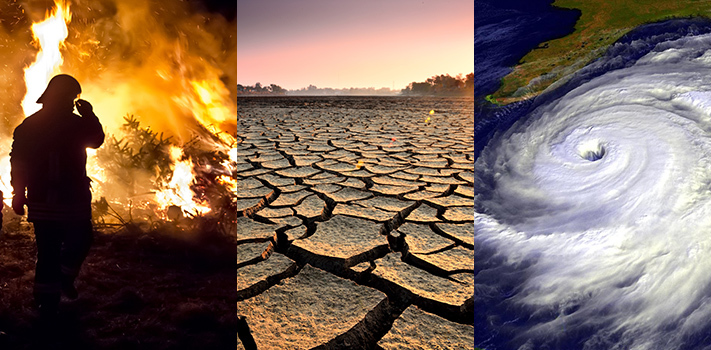
What I find most troubling about climate change is the fact that so many people still do not believe that this is even a real thing even though we see its effects every day that an animal goes extinct, or a major hurricane hits the east coast, or we have long periods of drought. If people were to understand the power that they have as individuals to make a change, even in the smallest ways, we could be moving forward with reducing our emissions and slowing the effects of climate change to give our planet a chance to catch up and adapt to the new environment. This toxic mentality that many of us still have that our individual efforts won't have any sort of impact is very damaging to our planet. There are legitimate reasons why not every household can afford to purchase a new (electric) vehicle or only eat organic foods, however, there are small changes that everyone can make and collectively make a huge impact in our environment.
I think that what needs the greatest attention right now is regulations on emissions for all major industries. Policy changes that require them to develop new ways of producing their products while reducing the levels of wastewater discharge and air emissions they release. Unless manufacturers start producing products that are better for our environment, either by being biodegradable or reusable over several times, we as a society are gonna continue to go for what is cheapest. As long as plastic products are sold in stores we will continue to buy them instead of the more expensive glass or aluminum alternatives. Unfortunately, many people do not have the financial means to opt for these safer products, so there will always be a reason why others are preferred.
Climate change is the result of human emissions which has made our planet warmer every year for decades. This global warming has lead to sea levels rising which have caused floods in several coastal cities and it has contributed to severe weather like hurricanes and large fires. It has also resulted in longer periods of drought which affect our agriculture and shorter periods of heavy rain. Our emissions from several different industries that produce the everyday items we rely on such as clothes, electricity, and cars have increased dramatically over the years due to a growing population and a larger demand for these products. Our depletion of many of the earth's natural resources like fossil fuels and natural gas has also contributed to this climate change crisis.
Climate change not only has a devastating effect on our planet but on our health as well. An increase in zone levels causes asthma in children. Higher levels of carbon dioxide in the air increase allergies and asthma rates. Women who have been exposed to wildfire smoke are more likely to have lower birth weight babies. During extremely dry temperatures, high levels of lead in the soil contribute to lead poisoning in children which causes damage to their cognitive development. When floods occur people become exposed to sewage and other contaminants in the water which causes them to get diarrhea. Insufficient rain can affect our production of crops which can lead to food shortages and higher prices for certain crops. These are just a few of the ways that climate change directly impacts the health of the population.
Unless we begin to change the way we rely on earth's natural resources without giving anything back to the planet our future generations are sure to suffer. Some of the things we can do on an individual level to decrease our carbon footprint are to recycle and compost, use public transportation whenever possible, avoid purchasing single-use items and instead go for those which can be reused over and over to limit the amount of trash we produce. We can also get together to plant trees and purchase our fruits and vegetables from local farmer's markets. Most importantly though we can make our voices heard by advocating for policy change and demanding regulations on many of the chemicals used to produce the products we use as well as on the emissions that these industries are discharging into our water and into the air.
Sunday, November 3, 2019
Zero Waste Life
Watching the videos and reading the articles on the impact that our trash has on our environment got me thinking about all the ways that I produce trash and how I can make some simple changes that are actually feasible for me and my lifestyle. Most of the trash that I produce comes from beauty products packagings like shampoo, toothpaste, facial cleansers, makeup products; food packaging like milk cartons, egg cartons, cheese plastic wrap, pasta boxes; and toilet paper and sanitary products.
I already get my drinking water from the tap thanks to help from my Brita filter. I do not drink soda or any other kind of prepackaged sweetened beverages, rather I make my own iced tea, lemonade, and Aguas Frescas. I do however drink Almond milk which requires me to throw out the carton when I finish. When I go to the grocery store I no longer use the thin plastic bags to put my fruits or vegetables in, rather I take my own reusable bags and make sure at checkout that the most fragile produce is at the very top like tomatoes, spinach, and cilantro.
Whenever I go shopping or just leave the apartment I make sure to bring with me a reusable bag incase I purchase something to avoid having to get a plastic or paper bag from clothing stores as well. I also always waive the option to print a receipt.
One thing I noticed when thinking about the trash I produce was that a great portion of my recyclables comes from weekly/daily junk mail like supermarket advertisements and campaign election propaganda. I have a 13-gallon trash bin that I use only for recyclables and I toss out the bag at the end of every month. This is by far my biggest source of trash.
My building has a compost bin in the basement which has really helped me reduce the amount of trash I produce. I make sure to separate all food scraps and put them in the compost bin. So really, aside from all my recyclables, the biggest source of trash in my home comes from toilet paper, tissues, and sanitary products which for the time being, I don't see this as being something I could change.
Subscribe to:
Posts (Atom)